
ValeroPay+
Valero Marketing and Supply CompanyTravel & Local
4.11.65K Reviews
- Version
- 6.0.0
- Installs
- 500.00K
- Age Rating
- Everyone
Screenshots
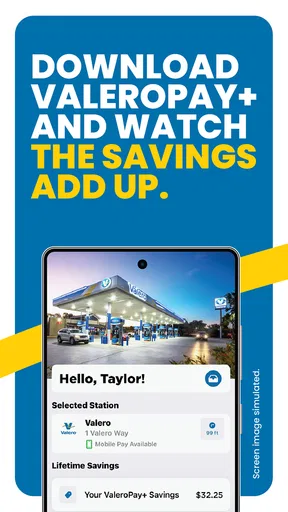
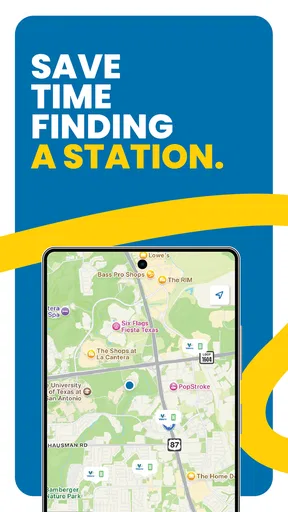
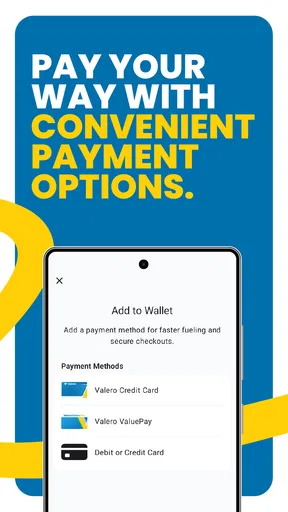

Our Review of ValeroPay+
 Analysis by Appyee
Paying for fuel is rarely the part of a trip I look forward to, so I appreciate apps that make the stop quicker without turning a simple purchase into a complicated account-management project. ValeroPay+ takes a focused approach: it is a free Travel & Local app from Valero Marketing and Supply Company designed around saving at the pump. After using it, my view is that it works best as a practical companion for people who regularly visit Valero locations, rather than as a complete travel planner or a universal fuel-price tool.
That distinction matters. The app’s value depends heavily on whether Valero stations are already part of your routine. If they are, having a dedicated way to handle fuel purchases and look for savings can remove a little friction from an otherwise repetitive errand. If you normally choose whichever station is cheapest, or you travel outside Valero’s footprint often, a broader mapping or fuel-comparison app may remain more useful. My recommendation is therefore positive but conditional: this is a sensible app for a Valero customer, not an essential download for every driver.
What using ValeroPay+ feels like in everyday driving
The strongest part of the experience is its narrow purpose. Instead of trying to become a general navigation service, roadside assistant, trip organizer and payment wallet all at once, ValeroPay+ keeps attention on the fuel stop. That makes the idea easy to understand from the first use. You install it because you want a more convenient way to interact with Valero fueling, and the app stays relevant when you are planning or making that purchase.
In my experience, the most useful habit is opening it before pulling into a station, not while standing beside the pump with a line of cars behind you. Checking the available station information and any applicable savings in advance lets me decide whether the stop fits my plans. It also avoids the common mistake of assuming that every location will offer exactly the same experience. A few seconds of preparation is more valuable here than repeatedly searching through the app during the transaction.
A realistic example is a weekday commute. I know I will need fuel before heading home, so I can check ValeroPay+ while parked at work, choose a nearby Valero location and review the options before driving there. At the station, the app has already served its most important purpose: it helped me arrive with a plan instead of making me compare possibilities at the pump. That small change is where the app feels more useful than simply opening a general map and searching for gas.
The app is free, which lowers the barrier to trying it. It is rated for Everyone, so its presentation is aimed at ordinary drivers rather than a specialist audience. The current release is version 6.0.0 and supports devices running Android 8.0 or later. Those details make it accessible to many Android users, although anyone with an older phone should check compatibility before planning to rely on it.
The practical strengths are concentrated in the fuel stop
The clearest strength is focus. A general map can show stations, directions and sometimes prices, but it usually treats the fuel purchase as just another destination. ValeroPay+ is built around the relationship between the driver and Valero’s own locations. That can make the information feel more relevant when your decision is not simply “where is the nearest gas station?” but “which Valero stop should I use, and how can I make this purchase worthwhile?”
I also like the way a dedicated brand app can support a repeatable routine. Once a driver has decided to use Valero regularly, the app becomes a single place to check before refueling rather than a collection of loosely connected searches. This is especially helpful for people who commute, manage several vehicles in a household, or take the same regional routes each week. The benefit is not dramatic on one isolated stop; it becomes more noticeable when the same decision comes up again and again.
Another useful insight is that savings should be treated as part of the decision, not as a reason to drive far out of the way. If the app shows an opportunity at a convenient Valero station, that can be worthwhile. But a saving is not automatically a saving once extra distance, traffic, or time is included. I would use the app to improve a stop that already fits my route, not to justify an unnecessary detour. That is a more realistic way to judge its value than focusing only on the promise of paying less at the pump.
The app’s audience size also suggests that it has moved beyond being an obscure experiment. It has passed 500 thousand installs, with an average rating of 4.1 from around 4 thousand ratings and roughly 1.7 thousand written reviews. I do not treat those figures as proof that every driver will enjoy it, but they do indicate that many people have found enough value to install and assess it. The written feedback is more useful as a reminder to expect a real-world utility app, where location, account and transaction details can affect satisfaction.
Where it fits beside maps, bank apps and fuel clubs
Compared with Google Maps or Apple Maps, ValeroPay+ is more specialized and less useful for broad route planning. Maps are better when I am traveling through an unfamiliar area, comparing many brands, checking a full journey or navigating to a destination. ValeroPay+ is better when the question is specifically about using Valero and making that stop more convenient. I see the two types of app as complementary rather than direct replacements.
Compared with a bank or mobile-wallet app, the dedicated fuel app has a different advantage. A bank app can show the charge after it happens, but it usually does not organize the fuel-location experience around Valero. A wallet may be faster for a familiar payment, yet it does not necessarily help me decide which Valero stop makes sense or whether a fuel-related saving is available. The dedicated app earns its place when the pre-purchase information matters as much as the payment itself.
Fuel-price comparison apps can be stronger for drivers whose only priority is finding the lowest nearby price across every brand. That is the important trade-off. ValeroPay+ is not the obvious choice for someone who changes stations constantly based on a few cents of difference. Its value is tied to loyalty, convenience and the specific Valero experience. If you prefer a brand-neutral search, use a comparison tool first and treat this app as an optional second step.
For a regular Valero customer, however, the focused design can be less distracting than switching among several services. I would rather use the dedicated app for a planned Valero stop and a map for navigation than expect one application to do both jobs equally well. That division of labor keeps expectations realistic and makes the app easier to evaluate.
The meaningful limitation: convenience depends on conditions outside the app
The biggest weakness is not necessarily a missing button or an awkward screen. It is that the app cannot make every Valero station equally convenient. Your experience still depends on whether a suitable location is nearby, whether it lies along your route, and whether the available savings justify choosing it. A driver in an area with limited Valero coverage may open the app only occasionally, which weakens the reason to keep it installed.
There is also a planning burden that is easy to overlook. To get the most from the app, I need to remember to check it before the stop and pay attention to the details of the offer or station information shown there. If I wait until I am already at the pump, I may be rushed, distracted or dealing with poor reception. My practical tip is to review it while parked or before leaving home, then keep the actual fueling interaction as short as possible.
That workflow is particularly important on road trips. A dedicated brand app can be helpful when I know I want to stop at Valero, but it should not replace a wider route plan. I would map the journey first, identify realistic fuel breaks and then use ValeroPay+ to evaluate the Valero options that fit those breaks. Relying on one brand app to solve the entire trip could leave me with fewer choices if the next suitable station is farther away than expected.
Another point of friction is the difference between perceived and actual savings. The app can make a discount or pump-related benefit easier to notice, but I still have to compare the total situation: distance, time, fuel level and the alternatives nearby. A saving that looks attractive in isolation may not be worth changing a convenient route. This is not a reason to reject the app; it is a reason to use it as a decision aid rather than an automatic instruction.
I would also avoid installing it solely because a friend says every driver should have it. Its usefulness is personal and geographic. Someone who rarely buys fuel at Valero may gain little from another app on the phone. Someone who regularly stops there can reasonably see the same download as a small tool that pays for its space through repeated convenience.
Small habits that make the app more useful
My first recommendation is to establish a “before the drive” routine. Check ValeroPay+ when you already know you will need fuel, not when the warning light has become an emergency. This gives you time to compare the available Valero stop with your route and avoid making a rushed decision. It also makes it easier to notice whether the app is genuinely helping you over several visits.
Second, separate station discovery from navigation. Use the app to decide which Valero location is relevant, then use your usual navigation tool for live directions and traffic. This is more efficient than expecting the fuel app to replace a navigation service. It also gives you a fallback when your route changes unexpectedly.
Third, judge the app over a handful of normal refueling trips instead of one visit. The useful question is not whether a single stop felt faster; it is whether the app repeatedly helps you choose a convenient Valero location, understand the available savings and avoid unnecessary searching. This approach prevents one unusually easy or difficult station visit from shaping your entire opinion.
Fourth, keep a clear boundary between convenience and loyalty. If a Valero station is already close, the app can make that familiar choice better. If another station is substantially more convenient or better suited to your route, loyalty should not override common sense. I consider that a strength of a thoughtful workflow: the app supports my decision without making the decision for me.
Finally, keep the phone ready before approaching the pump. I would not recommend trying to create an account, search for a station or study savings while driving or while holding up another customer. Preparing in a safe place makes the experience calmer and reduces the chance that the app becomes another distraction during a routine stop.
Who should install it, and who should skip it?
I think ValeroPay+ is a good fit for drivers who frequently buy fuel at Valero, live or work near Valero locations, and want a dedicated way to check pump-related savings before paying. It is also sensible for households where one person normally handles fuel planning and wants a repeatable process rather than a last-minute search. For these users, the app’s narrow focus is an advantage because it keeps the relevant information close at hand.
It can also suit occasional travelers who already know that Valero stations are part of their route. In that case, I would install it before the trip, use it to prepare likely stops and keep a general map available for navigation. The application is most useful when it complements a plan rather than when it is expected to create the plan from nothing.
I would skip it if you almost always choose fuel based on the cheapest brand in the immediate area. A brand-neutral comparison service will serve that purpose better. I would also skip it if you rarely drive, rarely visit Valero or do not want another account-centered utility on your phone. Free does not mean costless in a practical sense: every app takes storage, attention and occasional maintenance.
People who expect a full travel assistant should look elsewhere as well. This is not the app I would choose for hotel research, public transit, sightseeing, comprehensive road-trip planning or broad navigation. Its identity is much more specific. That specificity is exactly why it can be useful to the right driver and easy to ignore for everyone else.
My final view after putting it into a driving routine
ValeroPay+ succeeds because it addresses a modest but recurring problem: making a Valero fuel stop easier to plan and potentially more rewarding. The free price, Everyone rating and support for Android 8.0 or later make trying it straightforward, while the 6.0.0 release shows that the app is an established product rather than a one-off experiment. Valero Marketing and Supply Company has kept the concept centered on its own fueling network, and that clarity is more valuable than a long list of unrelated tools.
My criticism is equally clear. The app cannot overcome limited station coverage, and it should not be mistaken for a universal fuel-price comparison service or a replacement for maps. Its benefits are strongest when a Valero stop already makes sense and I check the app before driving there. If I use it in that context, it can turn a routine purchase into a more deliberate and convenient one.
So, would I recommend it? Yes, to regular Valero customers who want a dedicated fuel companion and are willing to build it into their pre-stop routine. I would not recommend it as a must-have for every driver. Install it when Valero is part of your normal route; skip it when brand flexibility matters more than pump-specific convenience. That is the honest boundary of its usefulness, and within that boundary, it does its job well.
Verdict
Strengths of ValeroPay+
- Pay for fuel and manage purchases directly from your smartphone.
- Convenient access to Valero promotions and available rewards.
- Helps reduce time spent at the pump and inside the store.
- Digital receipts make it easier to track fuel-related spending.
- Useful for frequent Valero customers who want a centralized payment tool.
Limitations of ValeroPay+
- Only useful at participating Valero locations and supported stations.
- Requires account setup and may need payment details to be stored.
- App benefits can vary by location, promotion, or membership eligibility.
- A weak mobile signal may affect payments or station-related features.
- Not ideal for drivers who rarely visit Valero stations.
Similar Picks in This Category
View All
Google Maps
Google LLC3.4

Google Maps Go
Google LLC4.1

Booking.com: Hotels & Travel
Booking.com Hotels & Vacation Rentals4.8

Google Earth
Google LLC3.8

Skyscanner Flights Hotels Cars
Skyscanner Ltd4.8

trivago: Compare hotel prices
trivago N.V.4.4
Frequently Asked Questions
What is ValeroPay+ and what can I use it for?
ValeroPay+ is Valero’s mobile payment app for participating Valero, Diamond Shamrock, and Beacon fuel and convenience locations. It is designed to let you pay for fuel from your phone, find eligible stations, view available offers, and manage payment methods in one place. Availability and supported features may vary by location, so checking the station details in the app before visiting is recommended.
How do I pay for fuel with ValeroPay+?
After installing ValeroPay+ and creating or signing in to an account, you typically add an eligible payment card and select a participating station. At the pump, follow the app’s instructions to choose the correct pump and authorize the transaction, then begin fueling when prompted. The exact steps can differ by station equipment, so carefully verify the pump number and transaction details before confirming payment.
Is ValeroPay+ free to download and use?
ValeroPay+ is generally free to download from the official Android or iOS app store, and the app itself does not normally require a separate subscription. However, standard mobile data charges may apply if you use cellular data, and your bank or card issuer could impose its own fees. Fuel prices, taxes, temporary authorization holds, and other transaction-related amounts are separate from the app’s availability.
Which payment methods and stations are supported by ValeroPay+?
Support depends on the participating station, payment network, and current app configuration. ValeroPay+ is intended for use with eligible payment cards and participating Valero-branded locations, but not every station or pump necessarily supports mobile payment. Before relying on the app, open the station information, review the accepted payment options, and keep a physical card available in case a location is not compatible.
Is ValeroPay+ safe, and what should I do if a payment or login fails?
ValeroPay+ uses account and payment information to process mobile transactions, but users should still protect their login credentials, keep the app updated, and avoid entering sensitive details on unofficial websites. If a payment, verification step, or login fails, check your internet connection, confirm that your card is valid, and retry only after reviewing the pump and station details. For unresolved issues, contact Valero or the support option provided inside the app.
